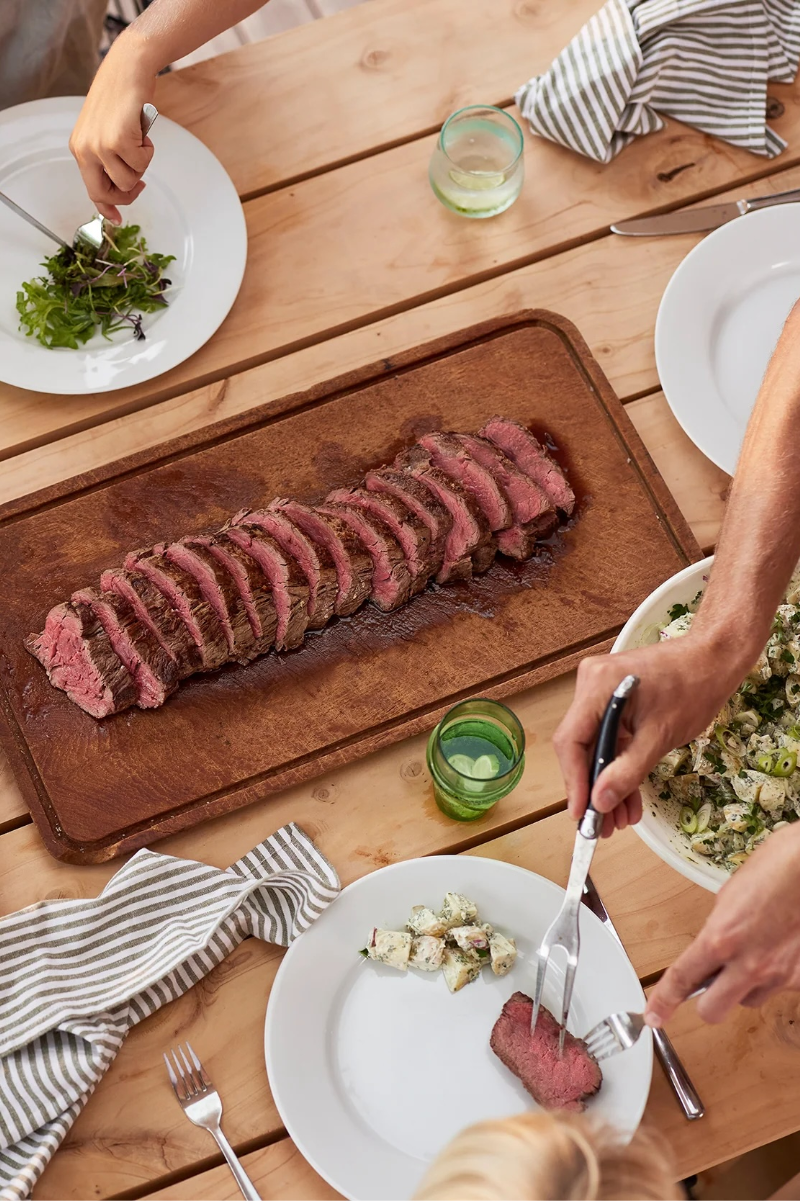

A great steak doesn't ask for much - a quality cut, a hot pan, and a few things done right. Get those right and the result speaks for itself. Get them wrong and even the best Scotch fillet can fall short of what it should be.
When NZ celebrity chef Simon Gault developed his Steak au Poivre recipe exclusively for Green Meadows Beef, we asked him to share the things he'd want every home cook to know before they hit the heat. These are his tips - straight from the chef, no fluff.
Know your Temperature
| Doneness | Remove from pan | Finished after resting |
|---|---|---|
| Rare | 44°C | 50°C |
| Medium rare | 48°C | 54°C |
| Medium | 54°C | 60°C |
| Medium well | 59°C | 65°C |
| Well done | 65°C | 71°C |
These temperatures are a guide only. Thickness, the starting temperature of the steak and the type of pan can all affect cooking time, so always rely on your thermometer rather than the clock.
Simon Says
Patting the steak completely dry is one of the secrets to developing a rich, caramelised crust. Moisture is the enemy of browning.
Season the steak just before it goes into the pan. Salting too early can draw moisture to the surface, making it harder to achieve a great crust.
Pressing the peppercorns onto the steak before cooking allows them to toast in the pan, creating the classic flavour that defines Steak au Poivre.
Always make the sauce in the same pan you cooked the steak in. The caramelised bits (fond) are packed with flavour and are the foundation of a great peppercorn sauce.
Steak's expensive. Thermometers are cheap. A digital meat thermometer is the easiest way to cook steak perfectly every time. Even experienced chefs rely on one rather than guessing.
Remember that the steak will continue cooking after it leaves the pan. This is called carryover cooking, which is why I remove mine from the pan about 6°C before my target finished temperature.
Don't be afraid to turn your steak every minute. Frequent turning cooks the steak more evenly from edge to centre while still producing an excellent crust. The old advice to only turn a steak once has largely been disproven.
Resting the steak on a wire rack rather than a plate allows air to circulate underneath, helping to keep the crust crisp while the juices redistribute. Don't forget to pour those resting juices back into your sauce for even more flavour.
Finish the sauce with cold butter, straight from the fridge, and whisk it in off the heat. This gives the sauce a rich, glossy finish and helps prevent it from splitting.
One tablespoon of black peppercorns gives a 500g Scotch fillet a medium pepper flavour. Increase the quantity if you prefer a bolder pepper flavour, or substitute some of the black peppercorns with green or pink peppercorns for a softer, more aromatic finish. A blend of black, green and pink peppercorns works well and lets you tailor the pepper flavour to your own taste.
Ready to put it all into practice? You'll find Simon's full Steak au Poivre recipe - including the step-by-step method and creamy peppercorn sauce - right here on the blog. All you need is a good Scotch fillet and a hot pan.